The Full-Throttle, Queer-Driven Resistance: An Editorial Interview with The Iron Roses
- Rainbow_Rocks
- August 11, 2026
- Editorial Features, Entertainment, I
- #ColumbusOhio, #DragIsArt, #IndependentJournalism, #RainbowRocks, independentmusic, LGBTQIA+, molovotnights, punkrock, queerpunk, theironroses
- 0 Comments
Written and Photographed by Independent News Reporter — Kyle Williams — Rainbow Rocks — RainbowRocks.space
August 11th, 2026
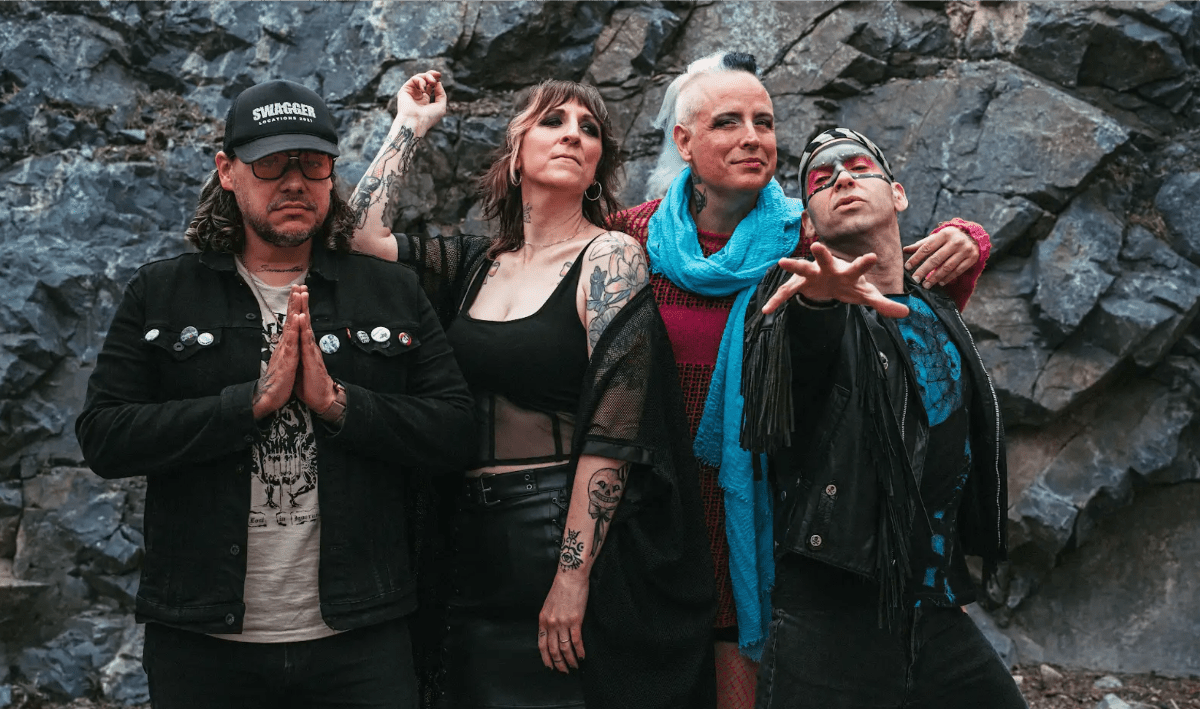
For Becky and Natasha of the politically charged punk band The Iron Roses, music is more than just an outlet—it is a lifeline, a weapon of hope, and a framework for survival. Operating with what Becky and Natasha describe as “the fully queer-driven force,” the self-released band handles everything independently with a public relations representative, pouring unyielding rage, systemic critique, and defiant joy into every chord of the album Molotov Nights.
Spanning a deep, wide-ranging 27-minute conversation, this un-condensed feature maps out every question, exchange, and detailed response from the interview, tracking the emotional journey of sustaining a modern LGBTQIA+ protest band against a backdrop of global exhaustion, political grief, economic exploitation, and the realities of tour life.
Part 1: Introductions and Tour Life Realities
Becky and Natasha started by greeting independent news reporter Kyle Williams of Rainbow Rocks warmly and settling in before diving into the heavier subjects of the interview. Becky asked how independent news reporter Kyle Williams of Rainbow Rocks was doing, and Becky and Natasha shared a lighthearted moment before getting into the meat of the conversation.
Becky and Natasha described the current phase as deeply overwhelming. Because Molotov Nights is an entirely self-released project, Becky and Natasha handle every single aspect of the rollout and touring personally, meaning Becky and Natasha manage all operations.
While the public response remains phenomenal, exciting, and deeply encouraging, the sheer volume of required work stays immense—though ultimately functioning as a labor of love belonging entirely to Becky and Natasha.
Q: Before we dive into the heavier stuff, I just want to say how great it is to connect. I’m an Independent LGBTQIA+ News Reporter based right here in Columbus, Ohio, covering music, culture, and politics for Rainbow Rocks. How are you both holding up with tour life and the rollout right now?
- Becky and Natasha reiterated the intensity of wearing every single hat as a self-released band, balancing the grueling physical demands of the road alongside the backend administrative work required to keep the project moving forward on Becky and Natasha’s own terms.
Part 2: Writing, Political Grief, and Dead Eyes
Q: Becky and Natasha, Molotov Nights is packed with unyielding rage, systematic critique, and a heavy dose of defiant joy. When the two of you were writing and recording these 10 tracks with your other bandmates while watching new horrors hit the newsfeed daily attacking the marginalized LGBTQIA+ community, how did you both balance that heavy political grief with the raw melodic power of the music to craft an uplifting love for your community?
- Becky and Natasha emphasized that balancing grief is a matter of basic survival. Becky and Natasha noted going through phases where excessive computer usage and the consumption of global news events induce mental exhaustion, leaving Becky and Natasha temporarily subdued on the couch. Pulling in the joy of writing remains essential not just for the audience, but for Becky and Natasha’s personal survival, granting relief from that heavy weight without ignoring or forgetting world hardships. Becky and Natasha recognize that other people require that break too. Fighting against oppressive systems and repeatedly rejecting harmful events constitutes a very long, cyclical fight that will not conclude with a single protest. Sustaining endurance across that long fight requires intentionally incorporating and making room for joyfulness. Concurrently, Becky and Natasha noted the frustration experienced when speaking out against issues immediately precedes brand-new crises, yet possessing a voice, a platform, and the ability to speak up prevents Becky and Natasha from falling into the void.
Q: Was there a specific breaking point or studio moment when the tone shifted from pure frustration into that defiant joy?
- Becky and Natasha explained that this shift occurred during the writing process long before stepping foot inside a studio together. A significant portion of the writing transpires online before in-person sessions. Becky shared that heading up the writing team occasionally brings frustration where Becky taps out, feeling a total lack of songs, material, or inspiration approaching deadlines. The shift occurred directly around the creation of “Dead Eyes”. Before that song, “Molotov Nights” and “To the Last” served as two older tracks held onto for the album while progress stalled elsewhere. The emergence of “Dead Eyes” created a realization that alternative styles and methods remained accessible, freeing Becky and Natasha to complete the rest of the album.
Q: How do you keep the music a weapon of hope rather than just letting it sit in this despair?
- Transformation occurs upon reaching the stage. Performing creates a tangible space for the band and everyone in the room to share, experience, and internalize hope. Becky shared that being transgender and touring presents major difficulties, making nightly club environments where those difficulties vanish exceptionally helpful. Becky and Natasha routinely share that narrative to provide audiences with a space for healing and reaffirmation, preparing individuals to re-enter the outside world ready to fight.
Part 3: Economic Exploitation and the Single “Dead Eyes”
Q: Speaking specifically on the new single, “Dead Eyes”, you call out the bottom line of war and how greedy billionaires view the working class as expendable pawns. How do you see economic exploitation intersecting directly with the political attacks on the marginalized LGBTQIA+ community today?
- When a group of people becomes expendable—reflecting the status of the vast majority—marginalized populations transform into systemic scapegoats. This dynamic further indoctrinates the population into submissiveness and exploitation. Directing working-class anger toward marginalized groups with even smaller amounts of power protects the ruling class and maintains social distraction. Consequently, basic existence grows increasingly dangerous for those situated on the societal outskirts.
Part 4: State-by-State Realities and Touring Dynamics
Q: So we’re going to jump into part 4… This is going to be a big topic for a little bit, so we’re going to update each other on what’s been going on in the LGBTQIA+ marginalized community based on what you guys have been seeing and what’s happening statewide and national. Statewide, what have you guys been seeing a lot with the attacks on the LGBTQIA+ community right now?
- Becky and Natasha noted residing in Maryland, which provides a statewide bubble of safety despite a local county featuring rural areas and historical tensions. Frequent travel exposes Becky and Natasha to varying regional conditions. Natasha shared that a transgender daughter lives in Columbus, Ohio, and navigated local schooling successfully, though other Columbus school systems experience varied conditions. From a state perspective, Maryland remains relatively stable despite county-level challenges, whereas Ohio exhibits worsening conditions and increased political volatility.
Q: Let’s go ahead and look at some of the venues you guys are playing in America compared to when you guys go overseas to Europe and see what the differences are there compared to here for the LGBTQIA+ community, where it’s not as well-known overseas for it.
- Reviewing the venue list highlights the Woodshop in Brooklyn, New York, as an interesting location within the borough. While located in Brooklyn, the venue offers multiple rooms and operational ease. Becky and Natasha expressed excitement regarding upcoming European dates, noting that walking through cities like Hamburg or Berlin reveals a higher frequency of queer-friendly, anti-Nazi public displays, stickers, and flyers than typically observed in the United States. Becky and Natasha praised Major German cities for maintaining a strict, constant, and active anti-fascist movement against racism, nazism, and homophobia.
Part 5: Sequencing the Emotional Journey and Looking Forward
Q: After everything that we’ve talked about today, you’ve mentioned that Molotov Nights makes space for more vulnerability, more defiance, and a deeper romancing of the human experience. When you look at the tracklist together from openers like “Dead Eyes” all the way up to “Rise Up Phoenix”, how do you both sequence that emotional journey between musical catharsis and political survival?
- Becky and Natasha approach track sequencing identically to setlist creation: guiding listeners through an emotional journey starting with high energy before providing moments of relief. Every track incorporates a political backbone, ranging from prominent statements like “Dead Eyes” to internal reflections like “Breathing Static”, which addresses personal protection during difficult journeys.
Q: When the house lights come up, and the amps turn off, how do you want your fans to take that specific musical energy out into the streets to grow the LGBTQIA+ marginalized community to push back against the current political climate?
- Becky and Natasha emphasized that live performances provide a crucial opportunity to establish tangible community by gathering like-minded individuals who might otherwise never connect. Becky and Natasha highlighted instances where fans met at shows and formed lasting friendships, attending protests and supporting one another. Post-lockdown dynamics shifted community interaction, making physical shared spaces vital for meeting people and translating ideals into real-world action. Above all, Becky and Natasha hope fans stay alive long enough to fight. Reflecting on past eras where punk bands universally opposed administrations compared to modern reluctance, Becky and Natasha stressed that allies must step up publicly, embrace discomfort, and offer vocal support rather than hiding behind private messages or silence.