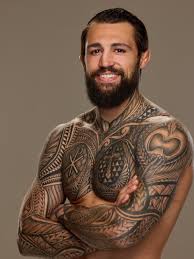
Reality TV Accountability: The Fallout from Kamu Kirk’s Slurs and Insensitivity
- Rainbow_Rocks
- July 31, 2026
- Breaking News, Entertainment
- #IndependentJournalism, #RainbowRocks, Big Brother, CBS, Kamu Kirk, Kamuela, LGBTQIA+, Salina EsTitties
- 0 Comments
Written By News Reporter Kyle Williams – RainbowRocks.space – July 31st, 2026
Reality television has always traded on manufactured drama, but there is a wide gulf between strategic gameplay and toxic bigotry. Fans of CBS’s long-running staple Big Brother are currently drawing that line in the sand, launching widespread calls for a network boycott following a string of inflammatory, deeply offensive actions by contestant Kamuela “Kamu” Kirk.
The latest firestorm erupted after a resurfaced social media video began circulating widely online, capturing the 32-year-old MMA fighter mocking an individual in distress during an arrest. In the clip—originally saved to Kirk’s Instagram highlights from December—he films an incident in an apartment complex parking lot where police are attempting to subdue a man shouting, “I need help!” As the distressed individual repeatedly yells “I can’t breathe,” Kirk laughs at the scene, claims onlookers are cheering, and casually cracks the vicious remark: “Bro thinks he’s George Floyd.”
The callous reference to the 2020 murder of George Floyd—whose killing by Minneapolis police officer Derek Chauvin sparked global reckonings with systemic racism and police brutality—was immediately condemned by viewers as both flagrantly racist and completely devoid of human empathy.
A Pattern of Bigotry on and off the Screen
This explosive controversy does not exist in a vacuum; it follows a trail of derogatory behavior that has already alienated large swaths of the show’s viewing audience. Earlier in the current season, Kirk landed in hot water after making overtly homophobic remarks directed at fellow houseguest Jason De Puy (widely known in the drag community as RuPaul’s Drag Race star Salina EsTitties). While conversing with Head of Household Rick Devens, Kirk dismissed De Puy with a hostile declaration: “Bro, miss me with the drag stuff. Miss me. I’m still an MMA guy, and I have an image to uphold.”
When a reality contestant treats queer identity as a threat to their “image” and subsequently trivializes the murder of a Black man as a punchline, it exposes an underlying rot that standard-issue reality television editing attempts to gloss over.
Why This Matters for Ohio’s LGBTQIA+ Community
For queer, trans, and marginalized communities in Ohio, cultural flashpoints like the Big Brother casting controversy are deeply intertwined with the broader political climate we fight against every day.
Reality TV serves as a powerful mainstream cultural mirror. When Major Networks platform individuals who casually deploy anti-LGBTQIA+ sentiments and racist dog-whistles—and initially fail to take swift, decisive accountability—it normalizes that hostility in everyday public spaces. It reinforces the same cultural permission structure that statehouse extremists in Ohio rely on when they push targeted discrimination into our schools, local businesses, and community spaces.
Pop culture consumption is never truly neutral. When fans call for boycotts and accountability against blatant bigotry on National Television, they are refusing to let corporate Entertainment Networks profit off the dehumanization of marginalized people. At Rainbow Rocks, we stand with viewers demanding better—because safety and respect shouldn’t stop when the cameras turn on.